
Levator Scapulae
Levator Scapulae
Stretches
Stretches
Levator Scapulae NECK Stretch for All standing
Levator Scapulae NECK Stretch for All standing
How to perform the stretch:
1. Start in a standing position
2. Choose the muscle or side of the neck you intend to stretch
3. Extend the target shoulder behind you
4. Flex the elbow 90 degrees to bring the arm behind you
5. Rotate the neck 45 degrees away from the target muscle and flex the neck downwards to bring the chin towards the middle of your collarbone
6. Bring your opposite hand over the top of your head and grasp the base of the skull, gently ‘pulling’ your head downwards to further increase the stretch
7. Hold the stretch for 20 Seconds
8. Release the stretch
Levator Scapulae NECK Stretch for All sitting
Levator Scapulae NECK Stretch for All sitting
How to perform the stretch:
1. Start in a sitting position
2. Choose the muscle or side of the neck you intend to stretch
3. Extend the target shoulder behind you and flex the elbow 90 degrees to bring the arm behind you gripping (anchoring) the chair/bench you are sitting upon
4. Rotate the neck 45 degrees away from the target muscle and flex the neck downwards to bring the chin towards the middle of your collarbone
5. Bring your opposite hand over the top of your head and grasp the base of the skull, gently ‘pulling’ your head downwards
6. Slightly rotate the torso away from the target shoulder whilst flexing forward a little at the hips to further increase the stretch
7. Hold the stretch for 20 Seconds
8. Release the stretch
Muscle Details
Muscle Details
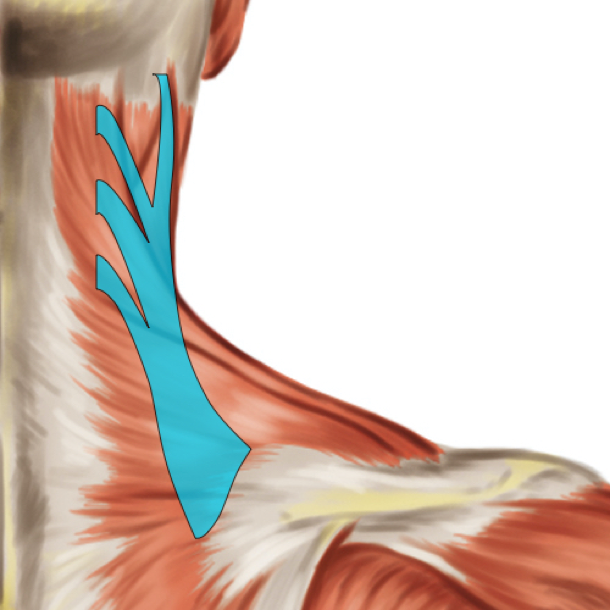
The Levator Scapulae works in close cohesion with the upper fibres of the trapezius and is most active when performing a shoulder ‘shrug’ (bilaterally).
Origin:
- Transverse processes of C1 – C4.
Insertion:
- Medial border of the scapula upon the superior angle.
Action:
- Elevation of the scapula, extension and lateral flexion of the neck.
Levator Scapulae muscle strain occurs when placed under tension or stress performing actions such as ‘cradling’ a phone handset on one shoulder. It is often overstretched and weakened due to poor posture and is commonly associated with neck and shoulder tension and pain for desk workers who suffer from the postural condition known as ‘rounded shoulders’.