
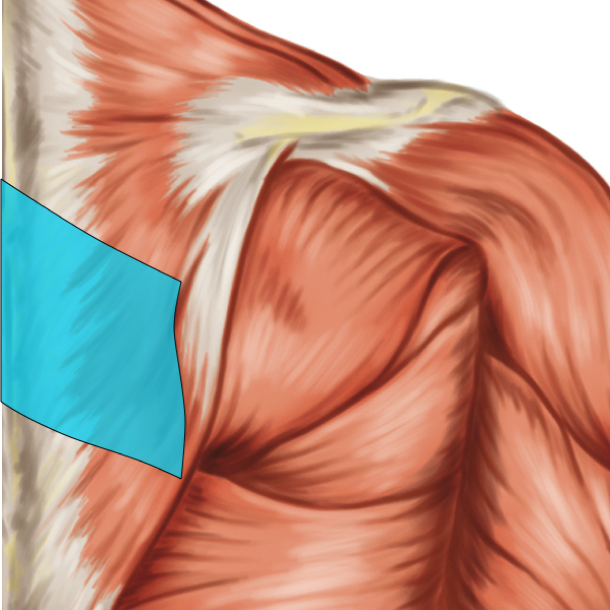
Rhomboid Major
Rhomboid Major
Stretches
Stretches
Rhomboid Major SHOULDER Bilateral Stretch for All standing
Rhomboid Major SHOULDER Bilateral Stretch for All standing
How to perform the stretch:
1. Start in a standing position
2. This movement stretches both sides at the same time
3. Take a deep breath
4. Wrap arms across the upper chest, each hand grasping the opposite shoulder, as far around the opposite shoulder as you can reach
5. Once your hands are ‘anchored’, breathe out
6. Completely relax your shoulders to increase the stretch
7. Hold the stretch for 20 Seconds
8. Release the stretch
Rhomboid Major SHOULDER Splits Twist Stretch for All standing
Rhomboid Major SHOULDER Splits Twist Stretch for All standing
How to perform the stretch:
1. Start in a standing wide lateral splits position
2. Choose the muscle or shoulder you intend to stretch
3. Flex forward at the hips beyond 90 degrees
4. Rotate your spine and torso away from your target shoulder
5. Extend your target shoulder and grasp the opposite calf with your hand
6. Push out (protract) your target shoulder down towards the mat
7. Gently rotate your spine and torso back towards your target shoulder to increase the stretch
8. Hold the stretch for 20 Seconds
9. Release the stretch
Rhomboid Major SHOULDER Bilateral Anchored Stretch for All standing
Rhomboid Major SHOULDER Bilateral Anchored Stretch for All standing
How to perform the stretch:
1. Start in a standing short walking lunge position and make use of a double wide anchor point (a doorway is best) in front of you
2. This movement stretches both sides at the same time
3. Cross your arms horizontally across the chest
4. Each hand grasps the opposite side of the doorway or anchor point
5. Once your hands are ‘anchored’, relax the shoulders into protraction
6. Squat down a little and gently lean back, passively pulling the shoulders to increase the stretch
7. Hold the stretch for 20 Seconds
8. Release the stretch
Muscle Details
Muscle Details
The Rhomboid Major & Minor are important muscles for helping to stabilize the scapula during upper extremity movements (such as chin-ups).
Origin:
- Spinous processes T2 – T5 and the supraspinous ligament.
Insertion:
- Medial border of the scapula from the scapula spine to the inferior angle.
Action:
- Retraction (adduction) of the scapula and elevation and downward rotation of the scapula.
Rhomboid muscle strain occurs during excessive shoulder retraction (pulling) exercises, such as rowing. These muscles are often overstretched and weakened due to poor posture and are commonly associated with neck and shoulder tension and pain for desk workers who suffer from the postural condition known as ‘rounded shoulders’.