
Scalene Middle
Scalene Middle
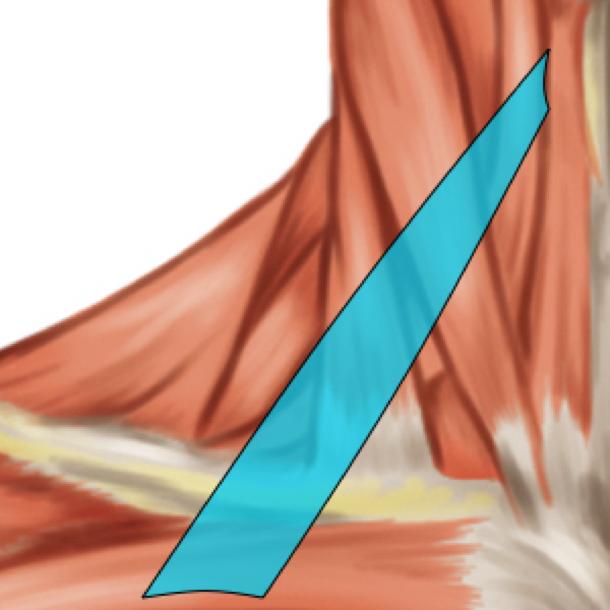
Stretches
Stretches
Scalene Middle NECK Stretch for All
Scalene Middle NECK Stretch for All
How to perform the stretch:
1. Start in any comfortable body position
2. Choose the target muscle or side of the body you intend to stretch
3. Extend the shoulder of the target muscle and flex the elbow to bring this arm behind the back
4. Flex the neck and head away from the target muscle
5. Reach over the head with the opposite hand and curl the fingers into the area above the ear on the side of the target muscle
6. Gently pull the head and neck in the direction of the flexion to increase the stretch
7. Hold the stretch for 20 Seconds
8. Release the stretch
Scalene Middle NECK soft tissue release Stretch for All
Scalene Middle NECK soft tissue release Stretch for All
How to perform the stretch:
1. Start in any comfortable body position
2. Choose the target muscle or side of the body you intend to stretch
3. Flex the elbow on the side of the target muscle
4. Curl the fingers and place the pads gently into the target muscle above the middle clavicle (collar bone) of the target muscle to lock the muscle into place
5. Flex the neck and head away from the target muscle
6. Reach over the head with the opposite hand and curl the fingers into the area above the ear on the side of the target muscle
7. Gently pull the head and neck in the direction of the flexion to increase the stretch
8. Hold the stretch for 20 Seconds
9. Release the stretch
Muscle Details
Muscle Details
The Scalenes muscle group is made up of three muscles; Anterior Scalene, Middle Scalene & Posterior Scalene. Between the anterior and middle scalene also passes the brachial plexus. A network of nerves that supplies signals to the shoulder and arm.
Origin:
- TPs of C2 – C7 (posterior tubercle).
Insertion:
- 1st Rib (behind anterior scalene).
Action:
- Flexion & ipsilateral flexion of neck Elevation of 1st rib (if neck is fixed).
Due to the anatomical location of these muscles, tightness (hyper-contraction) within can contribute to tension headaches and can refer pain both into the chest and shoulder. Tension within these muscles can also restrict the nerve signals, causing pain and paraesthesia ‘pins and needles’ down the arm and as far as the hand.