
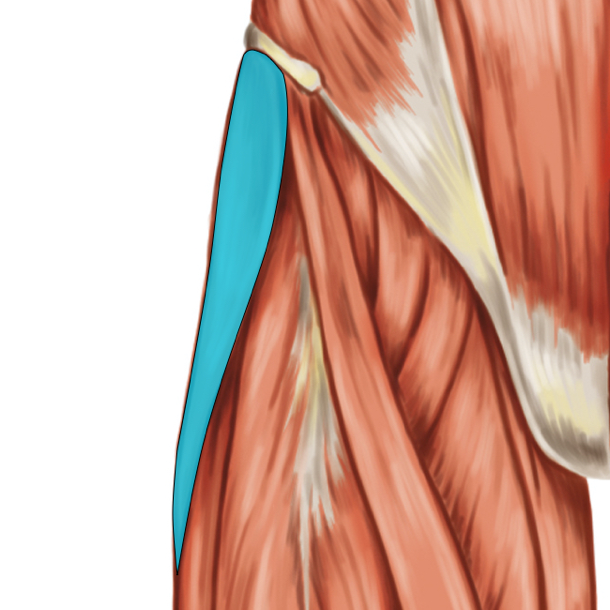
Tensor Fasciae Latae TFL
Tensor Fasciae Latae TFL
Stretches
Stretches
Tensor Fasciae Latae TFL, HIP Stretch for All standing
Tensor Fasciae Latae TFL, HIP Stretch for All standing
How to perform the stretch:
1. Start in a standing position
2. Choose the target muscle or side of the body you intend to stretch
3. Extend the target hip to the rear
4. Flex inwards (Adduct) the target hip to bring it behind the opposite leg
5. Raise the arms to place the hands on the head
6. Laterally flex the target hip outwards (lean the body into the target hip) to increase the stretch
7. Hold the stretch for 20 Seconds
8. Release the stretch
Tensor Fasciae Latae TFL, HIP Stretch for All standing wall supported
Tensor Fasciae Latae TFL, HIP Stretch for All standing wall supported
How to perform the stretch:
1. Start in a standing position beside a wall
2. Choose the target muscle or side of the body you intend to stretch by having this hip closest to the wall
3. Extend the target hip to the rear
4. Flex inwards (Adduct) the target hip to bring it behind the opposite leg
5. Place the hand on the same side as the target hip on the wall for balance
6. Laterally flex the target hip towards the wall (lean the body into the target hip) to increase the stretch
7. Hold the stretch for 20 Seconds
8. Release the stretch
Tensor Fasciae Latae TFL, HIP Stretch for All laying on side
Tensor Fasciae Latae TFL, HIP Stretch for All laying on side
How to perform the stretch:
1. Start in laying on your side position
2. Choose the target muscle or side of the body you intend to stretch by having this side down
3. Extend the target hip to the rear and place a rolled towel or foam roller under this knee
4. Rest the foot of your front leg on the floor in front of the body
5. Keeping the spine straight, extend out (abduct) the shoulder and elbow raise up onto the hand to increase the stretch
6. Hold the stretch for 20 Seconds
7. Release the stretch
Muscle Details
Muscle Details
The Tensor Fasciae Latae (TFL) is the main muscle involved in contraction of the iliotibial band (ITB). Along with the gluteus maximus, it is one of only two muscles that insert into the ITB.
Origin:
- Anterior superior iliac spine (ASIS) and the anterior aspect of the iliac crest.
Insertion:
- Iliotibial band (ITB) below the greater trochanter of the femur.
Action:
- Flexion, abduction & medial rotation of the hip and tension of the ITB to help stabilize the femur on the tibia during standing. Anterior pelvic tilt.
People who suffer from ITB syndrome or ‘runners knee’ should be working to stretch this muscle (along with the gluteus maximus) to ease the contraction ‘pull’ upon the ITB, rather than just relying on the ‘fad’ that is ‘foam rolling’ alone.