
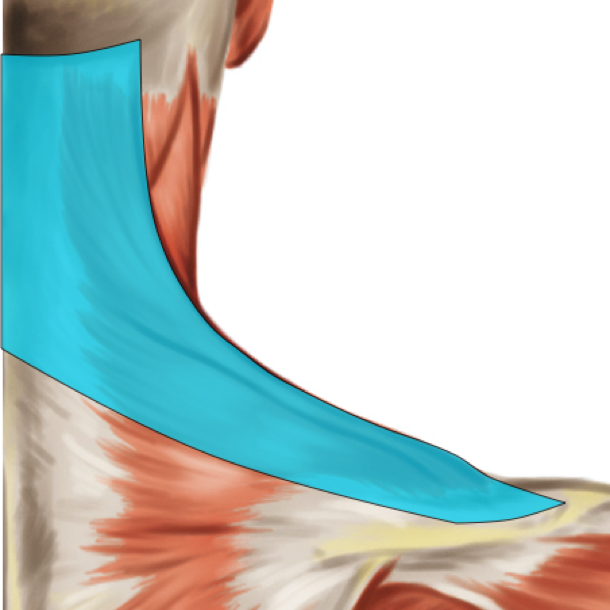
Trapezius (Upper Fibres)
Trapezius (Upper Fibres)
Stretches
Stretches
Trapezius (Upper Fibres), NECK Pull Stretch for All standing
Trapezius (Upper Fibres), NECK Pull Stretch for All standing
How to perform the stretch:
1. Start in a standing position
2. Choose the target muscle or shoulder you intend to stretch
3. Flex and adduct the target shoulder in front of the body, bringing the hand in front of the opposite hip
4. Push (protract) the target shoulder downwards in the frontal plane
5. Rotate the neck and head slightly (10 degrees) away from the target shoulder and flex downwards
6. Reach over the head with the opposite hand and curl the fingers into the area above the ear
7. Gently pull the neck further downward to increase the stretch
8. Hold the stretch for 20 Seconds
9. Release the stretch
Trapezius (Upper Fibres), SHOULDER Pull Stretch for All standing
Trapezius (Upper Fibres), SHOULDER Pull Stretch for All standing
How to perform the stretch:
1. Start in a standing position
2. Choose the target muscle or shoulder you intend to stretch
3. Flex and adduct the target shoulder diagonally (30 degrees) in front of the body
4. Flex the target elbow 45 degrees and grasp the elbow with the opposite hand
5. Push (protract) the target shoulder downwards in the frontal plane
6. Rotate the neck and head slightly (10 degrees) away from the target shoulder and flex downwards
7. Pull the target shoulder further downward with the opposite hand to increase the stretch
8. Hold the stretch for 20 Seconds
9. Release the stretch
Muscle Details
Muscle Details
The Trapezius is the broad flat, superficial muscle that spreads across the neck, shoulders and upper back. Each side of the spine is clinically divided into upper fibres, middle fibres and lower fibres.
Origin:
- External occipital protuberance, medial side of the superior nuchal line, the nuchal ligament and spinous processes of C7 – T12.
Insertion:
- Lateral 1/3 of clavicle, acromion and the spine of scapula.
Action:
- Retraction (adduction) and elevation of the scapula, lateral flexion of the head (unilaterally), extension of the head (bilaterally) and stabilisation of the scapula for arm movements.
The Trapezius muscle is commonly injured during ‘whiplash’ trauma. It is associated with neck & shoulder tension and pain for desk workers who suffer from the postural condition known as ‘rounded shoulders’.